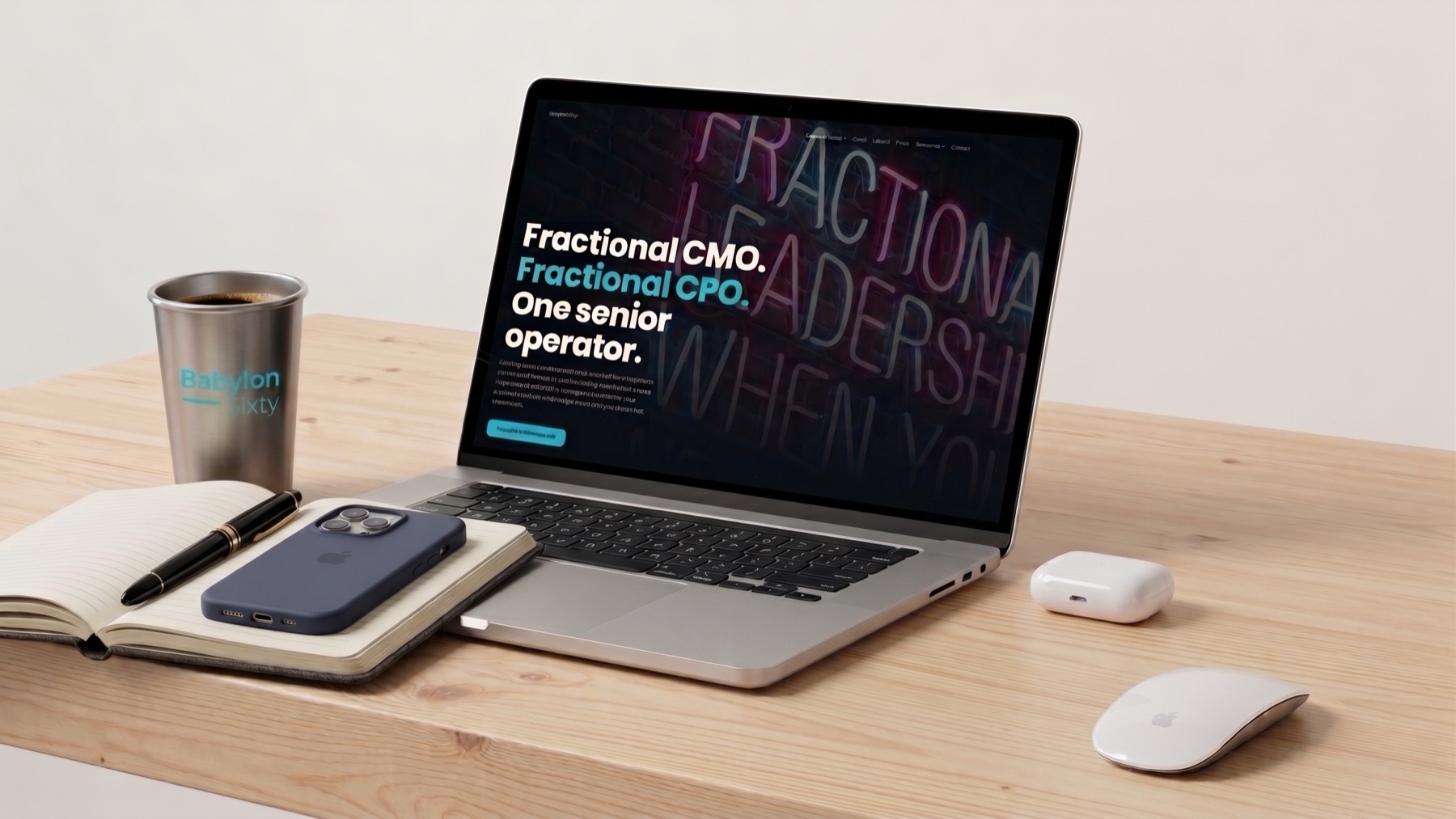
Fair warning: this post is about a process (sorry!). Learning, adapting, failing, arguing with a machine and, above all, staying curious. You won't find a how-to for building a website here, or a verdict on whether HubSpot beats Klaviyo.
My old website ran on a Squarespace template. It was clean, easy to edit, and did exactly what a template does: it sat there looking tidy. It had no smarts. It couldn't score a prospect, qualify a lead, book a meeting or feed my CRM. It also cost about NZD 80 a month to host.
Eighty dollars is small change, until you add it to everything else a small business pays for every month: email, Canva, Adobe, Miro, HubSpot and, now, a Claude Max subscription. Costs creep, and every one of them has to earn its place.
So I rebuilt the site with Claude. This article is about what that was like, including the parts that went sideways. Plenty of web developers, SEO specialists and digital warriors will find a thousand holes in the result, and I'd genuinely like to hear about them (DM me).
It started with strategy, and a couple of arguments.
Before a single page existed, I spent a lot of time going back and forth with Claude on the strategy: who the site is for, what it needs to say, which searches matter in New Zealand, how the pages should link, and what a founder needs to see before picking up the phone.
It wasn't a smooth conversation. We fell out a couple of times. Claude would push a structure I didn't agree with, or I'd ask for something that didn't survive its own research on keywords and search intent. Those disagreements were the useful part. They forced me to say what I actually believed about my positioning, and they caught assumptions I'd carried for years without testing.
The first lesson came early: the tool is only as good as the brief, and the brief only gets good when you argue with it.
The second took longer to learn. Sometimes I lost the argument on the evidence and kept my position anyway, and I was right to. Claude argues from data and patterns. It's very good at that. What it can't fully weigh is the human side: the nuance in how a particular founder talks about their problem, the instinct you build over years in the room, and the irrational, emotional part of every buying decision that no keyword report captures. People still buy from people. On those points we agreed to disagree, and my conviction won. Your point of view has genuine merit. Don't let AI be the only voice in the room.
Design came from a brand system, built first.
The design and brand work ran through Claude Design, and it only worked once I had built a proper brand design system for it to follow: tone of voice, colour, type, layout rules and the phrases I never want to see. Before that, the output was generic. After it, the output looked and sounded like BabylonSixty.
That system still does the heavy lifting. Every new page, tool and output now inherits the same palette, the same typeface and the same rules about how I write. When something drifts, I point at the rules and it comes back into line.
The build moved fast, and I needed help in places.
The build itself happened in Claude Code, working on the actual files of the site. The design handoff arrived on 11 September and the new site was live on my new domain the same day. In the first four days, 110 recorded changes went in: new pages, a readiness scorecard, a sales funnel health check, a set of workshop tools, bookings and analytics.
The numbers, for the curious: a new site live within 24 hours of the design handoff, 110 changes in the first four days, and about a billion tokens processed along the way, around 2 million of them written by Claude. That count is the build alone. The strategy and design conversations happened elsewhere and would add to it.
I'll be honest about where I needed extra support. Setting up the code repository on GitHub and connecting it to the hosting took more hand-holding than anything else. Some of the dashboards I had to log into myself, because the rule was that I type the passwords and keys, never the AI. There were moments where I pasted a secret into the wrong settings screen, and moments where I simply didn't know what a setting meant and had to ask.
A new domain came with it.
Leaving Squarespace also meant a change of domain. I chose babylonsixty.co.nz as the new home, registered it through Cloudflare, and started moving the old babylonsixty.com across as well. Every old address now forwards to the matching page on the new site, so links people saved years ago still land somewhere sensible, and my email carried on without a hiccup.
The registrar transfer of the .com is still in progress as I write this. It takes five to seven days to confirm, and there are a few loose ends to tidy once it does. That's the honest state of a real project: mostly done, with a short list of things waiting on someone else.
Connecting services took one sentence each.
This was the part that surprised me most. Things I'd have paid a developer for, or put off for months, took a plain-English request and a few minutes of checking:
- "Connect HubSpot so every enquiry creates a contact and a deal in the pipeline."
- "Set up Google Analytics and Search Console, and email me a dashboard every Monday morning."
- "Let visitors book a 30-minute call in my Google Calendar, Monday to Thursday only."
- "Add SPF, DKIM and DMARC records so my email stops looking suspicious to other mail servers."
Each one still needed me: to approve the permission prompt, to decide the rules, to check it worked. None of them needed a developer.
The piece I'm proudest of is one Claude and I built together from scratch. We called it the Babylon Studio: a private, password-protected area of the site that hosts the assets and tools for my workshops. It holds a GTM enablement workshop with a live "wall" of post-its the room fills in, a sales funnel health workshop that scores a funnel and projects the result of an action plan, and a human-centred design workshop in build. I bring the method and years of running these sessions; Claude turns each one into a tool I can put on a screen in front of a client, with the outputs ready the same day. It's the clearest example of what co-building means: neither of us could have made it alone.
The snags were real.
A few of the things that didn't go to plan:
- The spam check that failed only for me. The website's human verification kept rejecting me. After a lot of head scratching, it turned out a browser extension in my own Chrome profile was the cause. It worked first time in a private window.
- The free plan with one pipeline. HubSpot's free tier only allows one deal pipeline, so the plan for a separate workshop pipeline became a new stage in the existing one.
- The projection that went backwards. A funnel tool I built showed a worse result after the recommended actions were applied. The maths was fine; my test numbers didn't agree with each other, and the model trusted the wrong ones. We fixed the logic and added a test that fails if a projection ever goes backwards again.
- Twenty questions was too many. The first version of the free funnel check asked twenty questions. I tried it myself and gave up halfway. It now asks ten, and says as much.
- Four minutes of something unfinished. One update to live pages pulled in a page that wasn't ready, because two pieces of work shared a build script. It was spotted and removed within minutes, and the lesson went into the rules.
Every one of these was a stress ball moment. None of them was a disaster, because of the guardrails.
The guardrails matter more than the tools.
This is a long way from click-and-go. It still needs a careful eye, some design magic and a stress ball within reach. What kept it under control was a short set of rules, written down on day one and followed every time:
- Like for like. Nothing changes on the site unless I asked for it. If something looks wrong, it gets raised with a before and after, then I decide.
- One change at a time, with a record. Every change is logged with what changed and a note that it was my call, so I can see or reverse anything.
- Preview before live. New work goes to a private preview address first. I look at it on my own screen before it goes anywhere near the real site.
- Ask before anything outward-facing. Domains, email settings, redirects and anything customers see need my explicit go.
- I type the secrets. Passwords, API keys and tokens are pasted by me, into the right box, and never handed over.
- House style, always. The words follow my tone of voice rules, including the phrases I've banned.
The platforms before and after.
Before: Squarespace for the website, the babylonsixty.com domain and hosting, at about NZD 80 a month. Google Workspace for email. HubSpot, Canva, Adobe and Miro alongside.
After:
- Cloudflare hosts the site and runs its forms and tools, on the free plan. It also handles the new .co.nz domain, the security checks and email routing for the website's own messages, with the .com transfer on its way.
- Google Workspace is unchanged. My email address stays the same; its DNS now lives at Cloudflare, with proper email authentication added.
- GitHub holds the code, with every change recorded.
- HubSpot (the free plan, for now) is the CRM: contacts, deals and meeting bookings from the site land there automatically.
- Google Analytics, Search Console and Data Studio track the site, with a dashboard in my inbox every Monday.
- The Babylon Studio, the private, password-protected area of the site Claude and I built together, holds the workshop tools and assets I run with clients.
- Claude (Chat, Design and Code) for strategy, research, brand, design and the build.
The hosting bill went to zero. The capability went the other way.
Do's and don'ts, from someone who learned them the hard way.
Do:
- Write your rules down before you start, and make the AI follow them.
- Build the brand system first, so everything inherits it.
- Review every change, on a preview, before it goes live.
- Argue with the strategy. The disagreements are where the thinking happens.
- Agree to disagree when your instinct says so. Your read of people, and the emotional side of how they decide, still count.
- Ask what something means when you don't know. Every time.
- Keep a record of every change, so you can undo anything.
- Expect it to be fast, and budget time for the snags.
Don't:
- Push anything live you haven't eyeballed yourself.
- Hand over passwords or keys. Paste them yourself, in the right place.
- Assume the first answer is the right one. Test it with your own numbers.
- Let AI be the only voice in the room. What your business says, and believes, is your job.
- Expect it to be effortless.
Curiosity is the real skill.
Technology is moving faster than any of us can keep up with, and the gap between people who try things and people who wait is getting wider. I got things wrong, iterated and adapted, and learned more about my own business in the process than I expected to.
My advice to other founders: pick something small and real, set your guardrails, and have a go. Get it wrong in private, fix it, and then share what you learned. If you want to talk it through, or tell me what you'd have done differently, my inbox is open.